
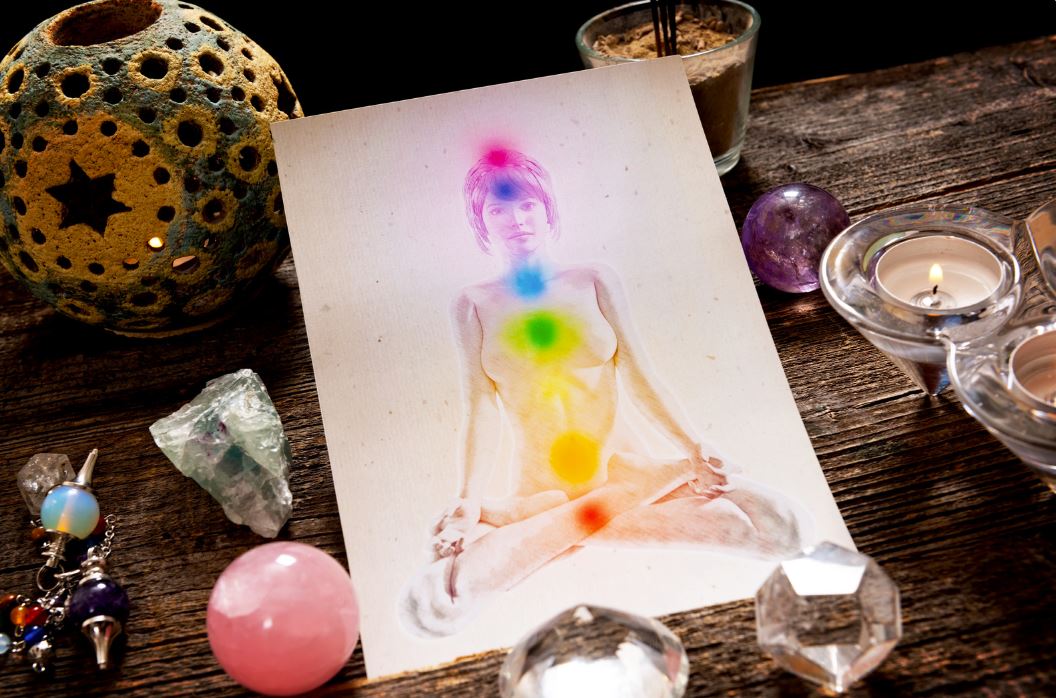
Chakras are part of several South Asian religious and contemplative traditions. The Sanskrit word cakra can mean “wheel” or “circle.” In modern wellness culture, chakras are often presented as seven energy centers aligned from the base of the spine to the crown of the head.
That familiar seven-chakra chart is a symbolic framework, not a map of anatomical organs or a medically measurable system. Chakra practices may support reflection, meditation, or connection to a tradition, but they do not diagnose disease, regulate glands, strengthen immunity, increase metabolism, or prove psychic ability.
There is more than one chakra system
Historical Hindu and Buddhist tantric traditions describe different numbers, locations, symbols, deities, sounds, and purposes. The idea that every tradition recognizes exactly seven chakras with a fixed rainbow color sequence is a modern simplification.
Context matters. Mantras and visualizations may belong to particular lineages and are not interchangeable lifestyle accessories. If you want to learn a traditional practice, seek a knowledgeable teacher who is transparent about their training and does not promise supernatural or medical results.
The modern seven-chakra framework
The descriptions below summarize common modern associations. They are themes for reflection, not biological functions.
Root chakra
Often associated with stability, safety, belonging, and material needs. A grounded reflection might ask: Do I have safe housing, enough rest, practical support, and a plan for urgent needs?
Sacral chakra
Often associated with emotion, pleasure, creativity, sexuality, and relationships. It does not control reproductive organs. Use the theme to consider consent, enjoyment, emotional expression, and creative time; this sacral-chakra relationship reflection adds practical boundaries.
Solar plexus chakra
Often associated with agency, confidence, and purposeful action. It does not increase metabolism or treat digestive illness. Ask what decision is yours to make and what small action is realistic.
Heart chakra
Often associated with compassion, grief, connection, and forgiveness. It does not strengthen the immune system or diagnose heart disease. Consider how to pair care for others with boundaries and self-respect.
Throat chakra
Often associated with communication and honest expression. It does not regulate the thyroid or endocrine system. Use it as a prompt to prepare a clear request, listen carefully, or name a limit.
Third-eye chakra
Often associated with insight, discernment, imagination, and perspective. It is not an anatomical eye and does not contain psychic powers. The guide to third-eye meditation explains how to treat imagery as reflection rather than evidence.
Crown chakra
Often associated with meaning, spiritual connection, and a sense of interdependence. Beliefs differ about its symbols and practices. A reflective question might be: What values connect my daily choices to something larger than myself?
What does “blocked” or “balanced” mean?
Those words have no standard clinical definition or validated diagnostic test. In spiritual practice, “blocked” may be a metaphor for feeling stuck, conflicted, disconnected, or unable to express a need. “Balanced” may describe a subjective sense of alignment or steadiness.
Translate the metaphor into specific observations. Instead of “my throat chakra is blocked,” you might say, “I avoid asking for help at work.” That statement points toward a practical next step and avoids mistaking a symbol for a medical finding.
A low-intensity chakra reflection
- Sit or stand in a comfortable position; there is no need to hold a painful pose.
- Choose one theme, such as safety, communication, or compassion.
- Take a few natural breaths. Do not force, hold, or rapidly cycle the breath.
- Notice thoughts and sensations without diagnosing them as energy blockages.
- Write one practical action: schedule an appointment, set a boundary, have a conversation, rest, or ask for support.
The National Center for Complementary and Integrative Health notes that meditation practices vary widely, evidence for health effects is mixed, and negative experiences can occur. Stop if a practice causes panic, dissociation, pain, or persistent distress, and seek appropriate help.
Health and safety limits
- Do not use chakra readings to diagnose or treat physical or mental illness.
- Do not stop medication or delay qualified care because a healer says an organ is “blocked.”
- Crystals, colors, foods, and mantras do not medically open chakras.
- Avoid extreme fasting, painful poses, forceful breath retention, or substances sold as detoxifiers.
- Be cautious of practitioners who promise a cure, claim exclusive powers, or demand urgent payment.
Food, sleep, movement, relationships, and healthcare matter through ordinary physical and social pathways. They should not be moralized as high or low vibration.
Frequently asked questions
Are chakras scientifically proven parts of the body?
No. Chakras are spiritual and symbolic concepts, not anatomical structures identified by medical science.
Are there always seven chakras?
No. Different historical and living traditions use different systems. The fixed seven-center rainbow model is one widely circulated modern framework.
Can a blocked chakra cause illness?
There is no validated medical test or evidence that chakra blockage diagnoses disease. Symptoms should receive appropriate clinical assessment.
Can I use chakra meditation safely?
A brief, gentle reflection is often low risk, but stop if it causes distress or physical symptoms. Do not replace needed medical or mental-health care.