
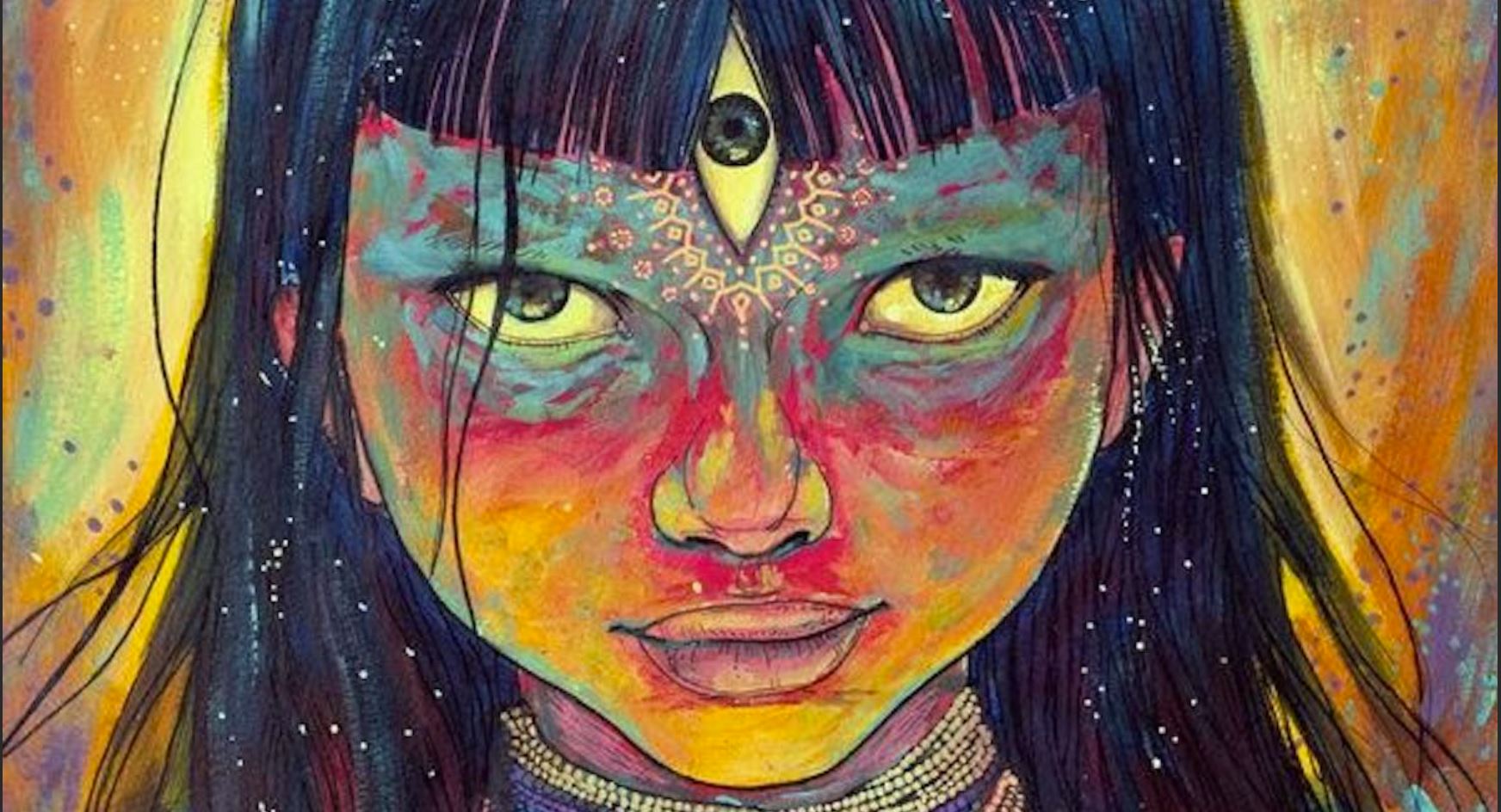
“Indigo person” or “indigo child” is a modern New Age identity based on the belief that some people have an indigo-colored aura and a special spiritual purpose. The label is not a medical, psychological, educational, or scientific classification, and an aura color cannot be objectively verified.
Some online sources divide indigos into four types: humanist, artist, conceptualist, and catalyst. These categories can be used as loose journaling archetypes, but they do not diagnose personality, assign a life mission, or explain dizziness, sensitivity, social difficulty, attention, or mental health.
Where the indigo idea comes from
Academic researchers describe “indigo children” as a contemporary New Age concept that developed through books, spiritual communities, and later online networks. It is not an ancient clinical or religious system.
For historical context, see Oxford Academic’s discussion of indigo children, New Age identity, and ideas about science. Academic study of a belief community does not validate the claimed aura or supernatural abilities.
The four popular archetypes
Humanist
This archetype emphasizes sociability, service, communication, and connecting groups. Grounded questions include: Do I gain energy from collaboration? Which community need matters to me? What role fits my skills and limits?
Artist
This archetype emphasizes creativity, emotional expression, and sensitivity. Creative talent is developed through interest, access, practice, feedback, and support—not a special gene or aura. Sensitivity does not mean you absorb another person’s pain.
Conceptualist
This archetype emphasizes systems, invention, focused work, and preference for smaller social settings. Introversion is not a defect, and a person can enjoy both solitude and connection depending on context.
Catalyst
This archetype emphasizes questioning convention and initiating change. Feeling different or struggling socially does not prove a mission to transform the world. Productive change still requires listening, consent, collaboration, evidence, and accountability.
Most people can recognize themselves in several broad descriptions. That overlap is a reason to treat the types as prompts rather than fixed identities.
Do not use the label in place of assessment
Traits attributed to indigo children—intensity, creativity, sensory sensitivity, boredom, social differences, impulsivity, strong interests, or resistance to rules—have many possible explanations. They may reflect ordinary variation, giftedness, stress, disability, ADHD, autism, learning needs, trauma, sleep problems, hearing or vision issues, or an environment that does not fit.
The Centers for Disease Control and Prevention’s ADHD diagnosis guidance explains that there is no single test and that qualified evaluation considers other conditions and health factors. A spiritual label should never be used to deny a child an appropriate medical, psychological, developmental, or educational assessment.
Support the need, not the aura
You do not have to settle the spiritual identity before offering practical support:
- reduce overwhelming light, sound, or crowd exposure when possible;
- provide predictable routines and advance notice of changes;
- allow safe movement, breaks, and different communication styles;
- teach skills without shame or claims of superiority;
- ask what helps instead of assuming;
- work with qualified educators and clinicians when functioning is affected.
Support should respect both autonomy and real-world responsibilities. Calling someone spiritually advanced can create pressure to be wise, selfless, gifted, or emotionally available at all times.
Crystals and chakras cannot treat symptoms
Hematite, jasper, obsidian, amethyst, labradorite, calcite, citrine, tourmaline, and sodalite may be meaningful objects. They are not proven to protect energy, treat dizziness, regulate emotion, improve communication, or address a developmental or mental-health condition.
If dizziness is new, severe, persistent, or paired with fainting, chest pain, weakness, speech changes, severe headache, or other concerning symptoms, seek appropriate medical care. Do not substitute grounding crystals for evaluation.
If chakra symbolism is personally useful, keep it symbolic; see what chakra systems mean and their health limits.
A safer identity reflection
- Write the indigo trait that resonates with you.
- Translate it into observable language: “crowds exhaust me” or “I enjoy solving systems problems.”
- List at least two possible explanations.
- Choose one practical support or skill to try.
- Review whether it improves functioning rather than looking for aura confirmation.
For emotional sensitivity and alternative explanations, read the grounded empath guide. A label may help tell a story, but it should not limit curiosity about your actual needs.
Talking with a child about being “indigo”
Avoid telling a child that they are more evolved, can read minds, are responsible for healing adults, or should distrust teachers and clinicians. Ask open questions, make room for imagination, and separate family beliefs from facts that affect health and education.
Useful language is: “Some people use indigo as a spiritual metaphor. It is not a diagnosis. We can still find out what helps you learn, communicate, rest, and feel safe.”
Frequently asked questions
Are indigo people scientifically recognized?
No. “Indigo person” is a modern spiritual identity, not a validated scientific or clinical category.
Can a person belong to more than one indigo type?
The four types are broad archetypes, so many people identify with several. That does not prove an aura or fixed spiritual mission.
Can crystals protect an indigo person’s energy?
Crystals may have personal symbolic value, but they are not proven to create protective energy or treat physical or psychological symptoms.
Does an indigo label replace ADHD or autism assessment?
No. A qualified assessment can identify support needs and rule out other causes. Spiritual beliefs may coexist with care but should not block it.